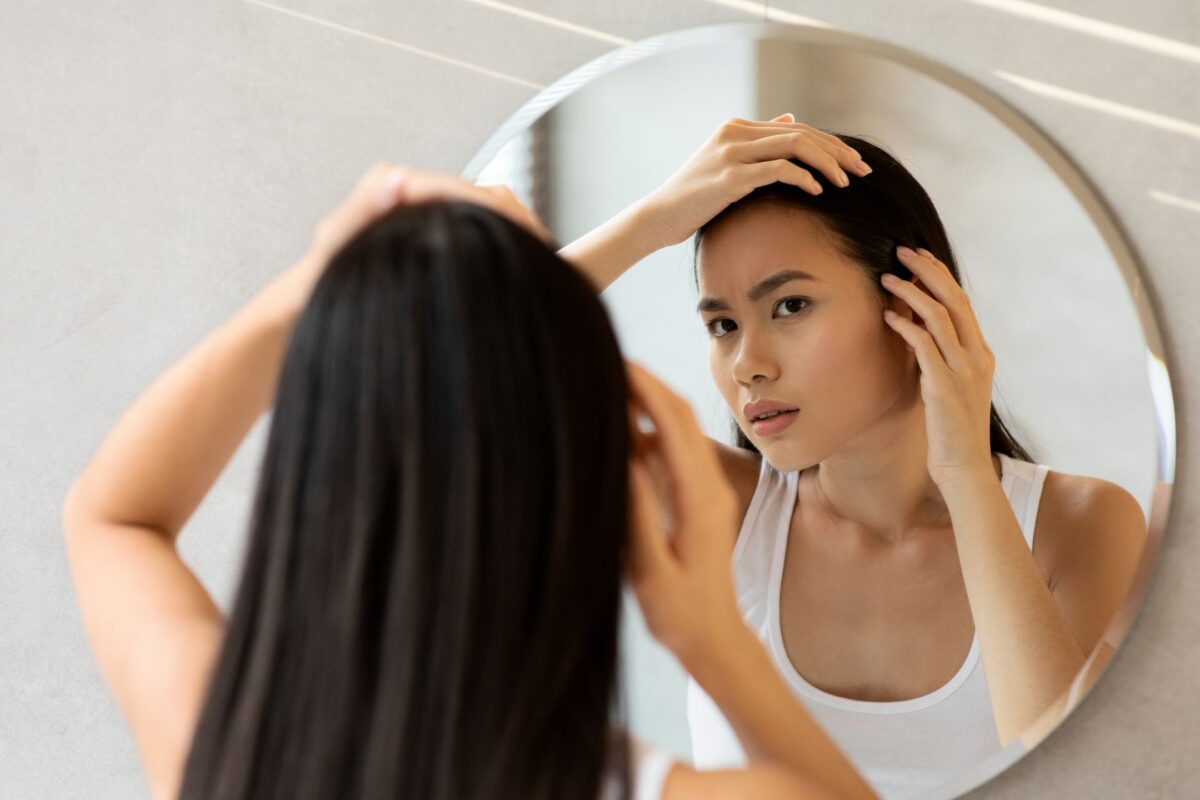
Search for Scalp Micropigmentation (SMP) online, and chances are, you will see plenty of men with buzz cuts, shaved heads and newly defined hairlines. SMP has become closely associated with this look, which does not exactly help when you are a woman staring at a widening part or noticing more scalp around your temples.
But SMP does not have to recreate a buzz haircut.
For women, it is often adapted to work through longer hair, making visible scalp less noticeable and creating the appearance of greater density. The pigment may be placed differently too, depending on whether the concern is a widening part, thinning crown, sparse temples or frontal hairline.
Can Women Get SMP?
Absolutely.
Women may consider SMP for diffuse thinning across the crown caused by hair loss, a widening part, sparse temples, an uneven or receding frontal hairline, alopecia, or areas where more scalp shows when the hair is pulled back.
Having SMP also does not usually mean cutting long hair short. Because the pigment is placed on the scalp, the artist can work between the existing strands and focus on the areas where more scalp is showing.
Where that pigment goes depends on the thinning pattern. A widening part may need more concentrated placement along a narrower section, while diffuse thinning across the crown calls for broader coverage. Around the temples or frontal hairline, the pigment needs to follow the natural growth pattern of the surrounding hair.
The result is less contrast between the hair and scalp, while the existing length stays intact.
How Is a Women’s SMP Hairline Different from a Men’s?
Men’s SMP often recreates the appearance of closely cropped hair. For women with longer hair, the priority is usually different: reducing how much scalp shows through the hair that is already there.
This changes how the hairline is designed:
- Pigment placement: Men’s SMP may place more emphasis on defining the frontal border and temples. For women, pigment is often distributed through thinner areas and blended into the natural growth pattern.
- Density: Lower-density placement around the front helps avoid a dark, clearly drawn edge.
- Hairline shape: A hairline for women created via SMP will usually work with the existing frontal line and facial proportions, often using softer curves or tapered edges instead of the straighter shapes associated with shaved styles.
- Coverage area: Some women need more pigment through the temples, while others may focus on the mid-hairline, crown or widening part.
Think less fresh barber line-up and more of the hairline you already have, with less scalp showing through it.
For women with alopecia or more significant frontal recession, a more defined hairline may still be suitable. The position and shape should work with the remaining hair and facial features.
Hair tattoo designs for women therefore vary according to the starting hairline, degree of thinning and preferred level of definition.
SMP Hairline Options for Women
Where the scalp is most visible will influence which areas of the hairline SMP focuses on. At Monostudio, options for women include:
- Side Hairline: Adds pigmentation around the sides and temples where the hair may appear sparser.
- Mid Hairline (Partial): Focuses on selected areas through the middle of the hairline.
- Mid Hairline (Full): Covers a broader section of the mid-hairline where more coverage is needed.
- Small Face Design: Adjusts the frontal hairline to create a different frame around the face.
Each design can be adapted to the client’s existing hairline, facial proportions and areas where more scalp is visible, instead of using the same outline for everyone.
What Does the SMP Process Look Like for Women?
For women, SMP is planned around the existing hair, with pigment concentrated where the scalp is most visible. The process typically involves:
- Consultation: The artist looks at the scalp, natural hair density and areas of concern before deciding on pigment tone and placement.
- First session: A light base of pigment is applied to establish the initial coverage.
- Later sessions: More density is added gradually and blended with the surrounding hair.
- Between sessions: The scalp is given time to settle. Some fading or light scabbing may occur before the pigment reaches its settled appearance.
Building the pigment gradually is especially important around the front, where too much density can leave the hairline looking dark or unnatural.
How Does SMP Look Over Time?

Once settled, SMP gradually becomes lighter rather than staying at the same intensity indefinitely. What you can expect includes:
- Longevity: SMP can last for several years, although this varies by individual.
- Gradual fading: The pigment becomes less noticeable over time, which is why periodic touch-ups may be needed.
- Sun exposure: SMP exposed frequently to UV can speed up fading, particularly along exposed partings and thinner areas.
- Touch-ups: These can refresh faded pigment and maintain the desired level of density.
How does SMP look after 10 years? Without touch-ups, the pigment would be expected to have faded considerably. With periodic maintenance, you can refresh the colour and density over time and adjust it if your natural thinning pattern changes.
Is SMP Right for Your Hair?
SMP can be a discreet option for women who want to reduce the appearance of visible scalp without changing their current hair length.
For women considering scalp micropigmentation, Monostudio can assess the hair, scalp and areas of thinning during a consultation before recommending the pigment tone, placement and level of coverage suited to the individual.
As part of Monostudio’s one-stop beauty services in Singapore, our team can also walk you through what to expect across your SMP sessions, from the initial design to how the pigmentation settles over time.
The goal is simple: a result that blends into your hair so naturally, you can spend a little less time checking your parting in every mirror you pass.
